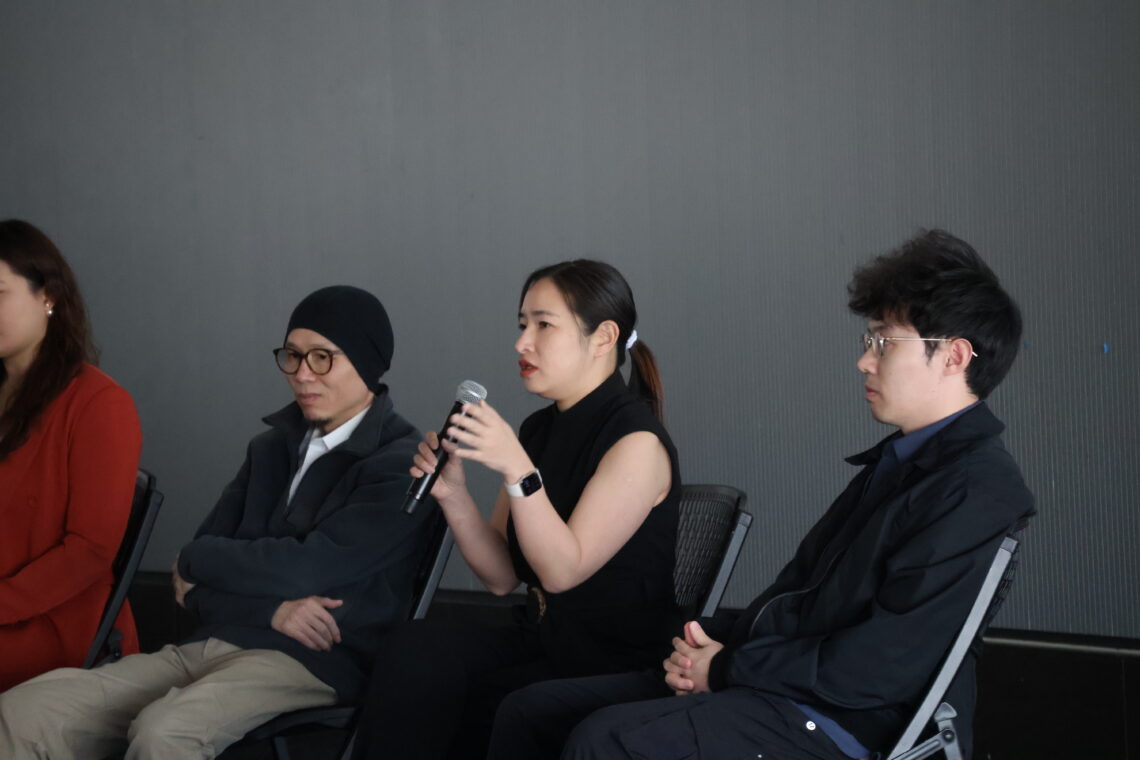
Last week, I was invited to speak on an entrepreneurship and career panel at the MIT CSSA Alumni Conference. Preparing for it forced me to sit down and actually articulate things I’ve mostly just lived through — and in doing that, I kept thinking: I really wish someone had said this to me earlier.
So I’m sharing it here.
Q: How do you find your entrepreneurial idea? How did you find yours?
Ideas usually form in one of two directions: vision-driven, where you start from a big “what if” — some unrealized future state you want to exist — and solution-driven, where you start from a real, specific problem you keep running into. Some people are visionaries. I’ve learned I’m not one of them. I’m firmly in the second camp.
So for me, finding an idea isn’t really about finding an idea. It’s about finding two things: a problem you’re willing to work on for a long time, and a problem someone will actually pay you to solve.
Once you have a candidate, push further: Is this just my problem, or do a lot of people have it? Is anyone already solving it well — and if so, can I do it better or more efficiently? If no one’s solving it, do I have any real reason to be the one who can?
So if I had to leave one thought: a good entrepreneurial thesis needs to satisfy three things simultaneously — you’ve genuinely experienced the problem (or have a deep insight into it), the market will pay for a solution, and the solution has the potential to scale. And you don’t think your way to that thesis. You build your way there, in the real world, through doing.
Q: Where should I start my company? Does geography matter?
I’ve tried this in multiple places — including Singapore and Australia— and I’ve thought seriously about cross-border team structures. Early on, I was idealistic about it. Remote works. People are talented everywhere. Why does location matter?
This feels especially true if you live in a large, expensive market like the US and you have access to more affordable talent elsewhere. Anyone who attended their first MBA class will tell you: leverage low-cost labor, sell into high-margin markets. That’s just arbitrage.
But a startup is not an MBA class.
That’s actually part of why building a startup is so hard — if it were just MBA logic, every MBA would be running a unicorn by now.
The reality is: in the early stage, context is everything. And context is local.
Every market has invisible rules — how decisions get made, what pace is expected, what “trust” looks like between founders and partners and customers. These aren’t written down anywhere. You absorb them by being there. If your leadership team is spread across geographies without shared context, those invisible differences become friction. And in early-stage companies, friction gets amplified because you’re already constantly course-correcting. The last thing you need is your team processing reality through different lenses.
That said, there’s no one right geography. The more useful frame is: what combination of resources, market, and team composition gives you the least friction? You’re not looking for the perfect city. You’re looking for the configuration where your team moves fastest and communicates most cleanly.
Geography matters. But team cohesion matters more.
Q: Who should I start a company with? How do you think about co-founders?
I’ve become more careful about this over time, not less.
The conventional advice is to find someone whose skills complement yours. That’s not wrong, but I wouldn’t lead with it. Skills can be hired. What’s much harder to fix is misalignment on the stuff that’s harder to discuss: risk tolerance, how you both handle money, what “moving fast” means to each of you, and what happens when things are genuinely bad.
The three things I actually look for:
Values and work style alignment. Not agreement on everything — but a shared instinct for how to operate under pressure. Resilience. You don’t really know someone until you’ve seen them at their worst. A co-founder relationship isn’t tested when things are going well. Structure upfront. Most co-founder relationships that fall apart don’t fail because people are bad — they fail because roles, equity, and decision rights were never clearly defined. Do that work early, even when it feels unnecessary.
And the thing I’d say most plainly: don’t find a co-founder because you’re lonely or scared. If you’d tell a close friend “don’t start dating someone just because you’re lonely,” apply the same logic here.
Founding a company is isolating — that’s real. But the answer to loneliness isn’t a co-founder. You’re looking for a partner in the true business sense: someone who makes the company more likely to succeed, not just more comfortable to run.
Q: What’s the one thing you wish you’d known earlier?
That intelligence is not a differentiator. At MIT, everyone is smart. That’s not what separates people.
What I’ve noticed — and struggled with myself — is that high-achieving people have a deep habit of solving problems by reasoning through them. That works brilliantly in school and in many jobs. But in startups, the market doesn’t care about your reasoning. It just responds to what you do.
A lot of Type A founders, myself included, fall into the trap of over-relying on their own logic. We convince ourselves we’re right before the evidence is in. We hold onto our original thesis a beat too long. We optimize for being smart instead of being responsive.
The edge, when I look at founders who build things that last, is usually something quieter: the ability to genuinely understand other people — users, partners, team members — not through your own lens, but through theirs. And the discipline to let market feedback override your internal conviction.
You can look like the decision-maker. You can technically have the final call. But your customers, your partners, your investors — they’re all voting on you every day. If they don’t buy in, the business doesn’t work.
Entrepreneurship isn’t about proving you’re right. It’s about finding what actually works.
Less “I think.” More “what does the market say.”
Thanks to the MIT CSSA for the invitation and to the moderators for the genuinely good questions. If any of this resonates — or if you disagree — I’d love to hear from you.