An early check-in looks like a small favor. For a short-term rental with no front desk, it's a turnover, cleaning, and access problem. Here's what one favor cost me, and why it led to Karri.
You’ve probably done this. You land at the airport at seven in the morning, on the good flight, the one that gets you into the city with a full day still ahead of you. Except your Airbnb isn’t ready until four in the afternoon. So now what? 1. The four ways travelers currently handle it Book an extra night, just to guarantee an early check-in. This works. It’s also the most expensive way to close a nine-hour gap — a full night’s rate, mostly unused, just to buy certainty. Find a luggage storage service nearby. A reasonable middle ground, except it rarely nets out cheap once you add it up: the storage fee, plus an Uber there, plus an Uber back later to retrieve everything — two trips, two fares, for bags that never needed to leave the airport. Drag your luggage around and sightsee anyway. Free. But you’re now touring a city with a suitcase, ruling out half the places you wanted to go, moving at the pace of your worst wheel. Find a café and wait it out. Also free. Also the option where your bags are handled and the morning is gone — the exact thing you landed early hoping to avoid. 2. What this actually costs you Every one of these is a different way of paying for the same nine hours — in money, in comfort, or in the time you actually flew in to spend. Pay for the extra night and you get certainty, at a real price. Use storage and you save on the room but spend it on fares and detours. Carry your bags or wait it out and you spend nothing, but you spend the morning. 3. The fifth option For travelers who don’t find any of the four above satisfying, there’s a fifth: hand your bags off at the airport and go start your day without them. That’s what Karri — the airport luggage pickup and delivery service — is for. Land, drop your bags, and go straight to the conference, the meeting, or the first walk through the city, while Karri delivers them to your address on a timeline that has nothing to do with when your room happens to be ready. No extra night booked on the chance you’ll want it. No round trip to a storage locker. No suitcase along for the sightseeing. Where this leaves me This is the first entry in the build log for Karri — starting with the problem as it actually shows up for the person flying in, before I get into how it looks from the side of the person running the hotel/Airbnb. Next: what it actually takes to say no to an early check-in request, and why saying yes is often the riskier choice for the host
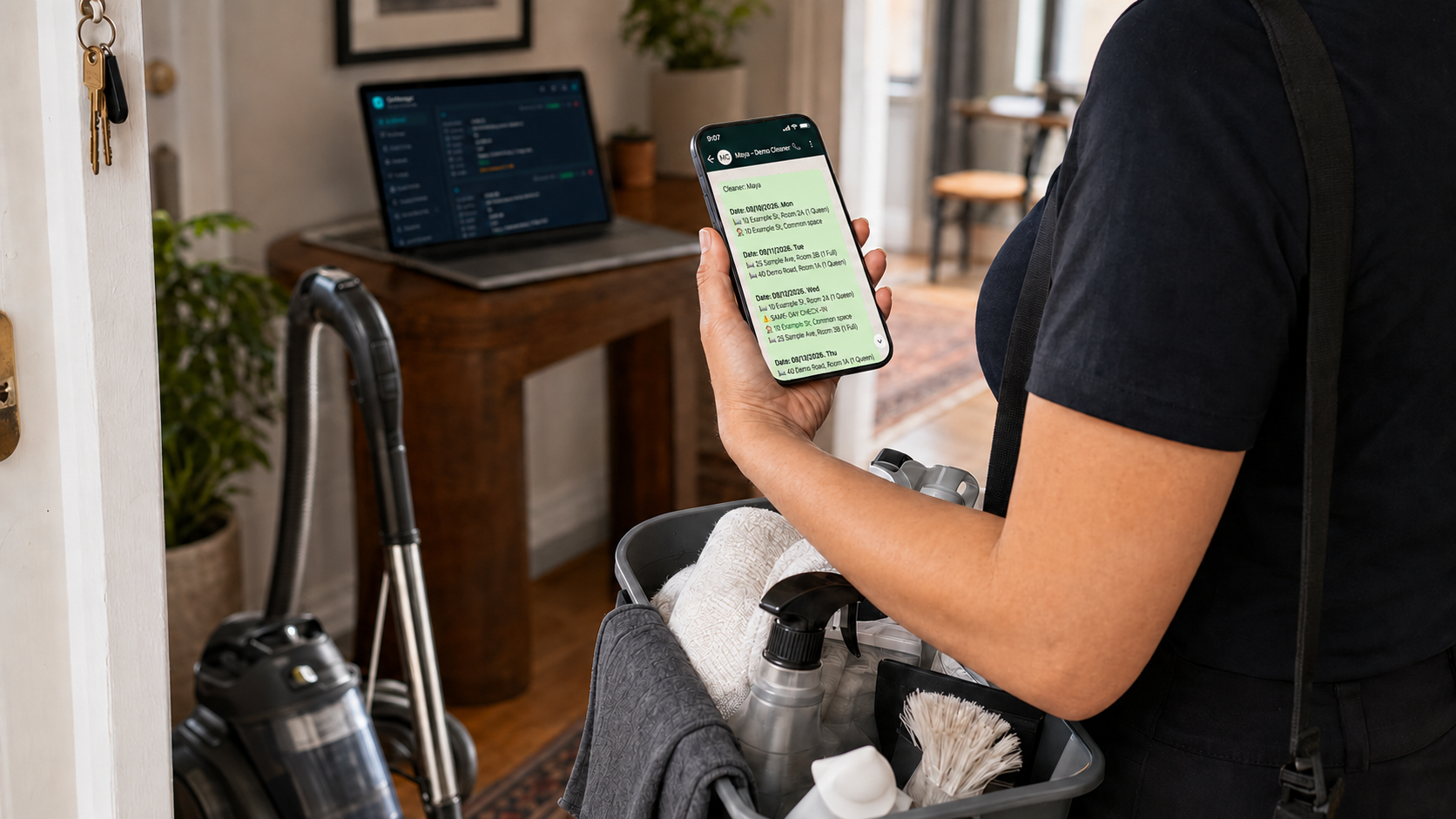
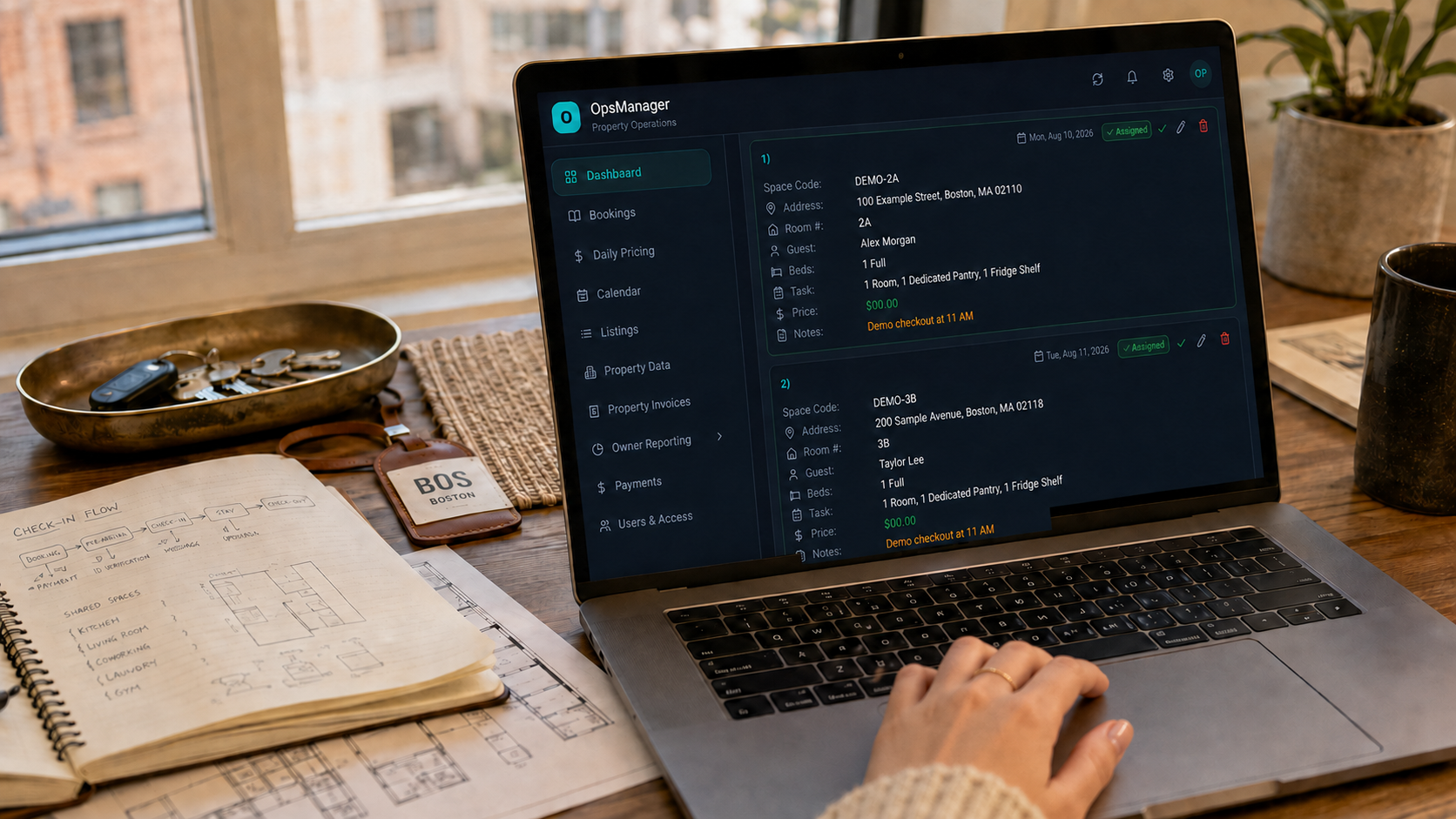
In the last article, I wrote about why I stopped shopping for a PMS and started building my own. The short version: every platform I tried was built by people who’ve never actually run a property. Vendor coordination is where that gap shows up the clearest, so it’s the first place I built for. If you run vacation rentals, mid-term rentals, or furnished housing, you already know: managing the cleaner calendar is one of the hardest parts of the job. I have my horror stories. The next guest is standing at the door, and the room inside is a mess — because my cleaner forgot they had a job that day. Or worse: I misread a booking, or a last-minute reservation came in, and I forgot to schedule a cleaner at all. It’s manageable at 5 rooms. At 50, it isn’t. 1. Why the fancy tools don’t actually help Traditional PMS platforms are proud of their calendar integrations — email notifications, third-party cleaner management tools, all of it. I don’t use any of it, because it misunderstands who’s on the other end. Cleaners aren’t sitting in an air-conditioned office checking emails from 9 to 5. They’re on the go, moving from one property to the next, all day. They don’t have time to open an app and read a notification. They use WhatsApp, or they call. That’s it. 2. What I tried before AI At 5 rooms, I didn’t need software at all. I wrote out each cleaner’s jobs every week and sent it over WhatsApp. When a job was done, I sent payment manually, one cleaner at a time. It was a lot of work, and the payment side especially was a mess — but at that scale, it was doable. Then I tried the obvious tools: Google Sheets, Google Calendar, a couple of rounds with Todoist, paid or free tools, I tried them all. None of it mattered — they were all about equally bad for what I needed. I was still tracking everything manually behind the scenes, and every one of these tools still required copying jobs over into a WhatsApp message by hand, which usually meant another round of editing once they were there. It was a mess dressed up as a system. That’s the pattern that stuck with me: low-value work, high stakes if you get it wrong, and you professional you could reasonably hire just to do this. So it fell on me — until I could hire AI to do it instead. 3. What I built instead So I built the version that actually matches how my cleaners work. The system now handles cleaner scheduling, bed type and job scope per room, pricing, and — the part that used to eat a full afternoon every other week — calculating bi-weekly payments per cleaner and emailing each of them an itemized breakdown, no manual math required. The optimization piece is where the real money is, and it’s also the part that’s too specific to my operation for any off-the-shelf PMS to have built. Some of my cleaners price by location, not by room — if they’re already on-site, an extra room in the same building costs less than a separate visit, because they’re saving their own travel time too. This is where property type matters, and it’s something I had to teach the AI explicitly. On a short-term or vacation rental, you generally don’t have room to optimize — guests book back to back, sometimes last-minute, and the clean has to happen right after checkout no matter what. But on furnished housing or mid-term rentals, turnover is much lower, and there’s often a day or two of slack between one guest leaving and the next arriving. That slack is exactly what the system looks for: a chance to shift a clean by a day and combine it with another unit at the same address. One recent example: a room with a checkout scheduled for a Saturday got pushed to Sunday so it could be combined with another unit in the same building checking out that day. Same cleaner, one trip instead of two, and a good discount for the combined job instead of two full-price visits. The daily piece is the one that matters most operationally day to day: every morning, it generates each cleaner’s task list and sends it straight to WhatsApp, so I’m not the one manually forwarding reminders anymore. 4. The pros: this is exactly the job AI should take over This is the category of work I now think AI is genuinely built for. It doesn’t require a brilliant mind — it requires an okay brain and complete reliability, applied to a job that’s high-stakes if you get it wrong but too low in value to justify hiring premium talent to do it. That combination used to mean it fell on me. Now it doesn’t, and that alone has made my life considerably easier. 5. The cons: I still can’t fully let go AI makes mistakes. Constantly. And the more I improve the system, the more new bugs I introduce along the way — every change is a chance to break something that was working. It saves me an enormous amount of time. But I still can’t treat it as fully autonomous — everything gets a review pass before it goes out. The mental model that’s worked best for me: this is my AI employee, and my job now is supervision, not execution. Where this leaves me Vendor coordination was never the interesting part of running COZi. It was just the part that broke the most, and the part no off-the-shelf tool was built to fix — because it was never built for how cleaners actually communicate. Replacing it didn’t require a smarter system. It required one narrow enough to fit the job. If you’re an operator reading this, I think this is your era. You hold something AI doesn’t have and nobody else can replicate — years of hands-on, day-to-day operating knowledge, the kind that only comes from actually doing the job. That’s the part that used to be hard to scale. Now it’s the part worth building around. Start building.
Somewhere along the way, streamlining COZi’s operations became one of my favorite parts of running it. Finding every friction point an operator hits — a cleaner who no-shows, a guest who checks in early, a payment that doesn’t reconcile — and quietly building a backup or a remedy for each one, until the whole thing runs without needing to lean on me constantly. That’s a genuinely satisfying kind of problem-solving, and I’m not going to pretend otherwise. But there’s a number every operator eventually hits where “I’ll just keep improving my own system” stops being the obvious answer, and “maybe I should get a real PMS” starts sounding reasonable. For me, that number arrived somewhere around 50 rooms. So I went and tried almost every PMS with a name you’d recognize. Here’s what I found. 1. The pricing doesn’t make sense at scale Most property management systems price per listing, typically $15–20 a month. That sounds fine until you do the math on 50 rooms: $750–1,000 a month, before you’ve automated a single thing you weren’t already doing. For $750 a month, I could hire someone in the Philippines to do everything the software does — and more, because a person can also use judgment. That comparison alone made most of these tools a hard sell before I’d even opened a demo. 2. Switching PMS is disruptive in a way the free trials don’t tell you The products themselves are, frankly, more similar than different — and the cheaper ones tend to be noticeably harder to use. But the real problem isn’t the interface. It’s what happens the moment you connect one to your OTA listings. Almost every PMS wants to take over your OTA settings the second you integrate — minimum stay rules, pricing, availability, all of it. There’s no “light” way to try one. You have to connect real, live listings to actually see how a system behaves, and if you don’t like it, disconnecting is its own project. That operational disruption is the real cost of a free trial, and it’s a big part of why I dragged my feet on this for so long even with trials sitting right there. 3. None of them are built for how I actually operate This is the one that ultimately mattered most. COZi isn’t a typical vacation rental portfolio — it’s co-living, which means bathrooms and kitchens are shared across multiple rooms. Cleaning, ideally, should be scheduled around actual occupancy, not a fixed calendar, so I’m not paying for a communal clean when half the rooms are empty. That’s an extremely specific need. It’s not a feature any general-purpose PMS is going to build, because it doesn’t apply to most of their customers — and it shouldn’t. But it’s exactly the kind of thing that’s easy to build when you’re building for one operation instead of thousands. That’s where vibe coding actually earns its place in this story. It’s not that AI makes building a PMS “easy” in some general sense — it’s that it makes building the specific, narrow thing your business actually needs viable, when no vendor was ever going to build it for you. Where this leaves me None of this is a claim that off-the-shelf PMS software is bad. For a lot of operators, the math and the fit are both fine. For COZi, at this size, with this kind of property, neither one worked — and that gap is what COZi Ops grew out of. This page will keep following that build as it happens — what’s shipped, what’s broken, and what I’d do differently with what I know now.
A few weeks ago, I met a young operator for coffee in Boston. He works at an overseas co-living company operating in two cities. The business is real — hundreds of listings, established operations, real momentum. He reached out thoughtfully, proactively, trying to understand what selling into the U.S. might look like and whether there was a path forward. The Pitch Began — and So Did the Déjà Vu We sat down, ordered coffee, and started talking. He began explaining the product. At first, it sounded like property management software. I interrupted gently. The U.S. market has no shortage of PMS tools. Some are excellent. Some are cheap. Some are extremely well-funded. It’s a market that rewards startups with great ideas but also one that’s brutally competitive. So I asked a question I’ve learned to ask early: “Why would I switch?” There wasn’t a clear answer. That moment felt uncomfortably familiar. When the Story Keeps Shifting Sensing hesitation, he reframed. “It’s not a PMS,” he said.“It’s a brand.” They have hundreds of listings. A “network” in their existing markets. If I joined, I could tap into their user base. And that’s when the déjà vu deepened. I remembered doing this myself — shifting the narrative mid-conversation, hoping one of the angles would land. When you don’t have a sharp answer, you reach for more words. But every shift makes the listener work harder. By then, my head was full of questions he wasn’t asking. Is the demand my current business challenge?Will your users even book in my market?If this is a brand, are you going to pour in marketing capital to grow the presence here? what does that actually mean in practice? The pitch started to feel like PMS → marketplace → brand → network → everything. And when you’re everything, you’re nothing. Watching a Sales Conversation Quietly Derail Nothing dramatic happened. There was no clear rejection. No awkward ending. Just a gradual loss of focus — the kind that kills sales without anyone realizing it. And that’s often how early startup sales fail. Not with a no, but with confusion. What struck me wasn’t his ambition. It was how much of my younger self I saw in him. I used to believe that energy and confidence could compensate for clarity. That customers needed to be convinced, not understood. That belief cost me years. The Lesson I Keep Relearning: Sales Is Listening At some point, I found myself explaining my business instead. How I operate.What tools I use.What problems I actually have. If I’m going to spend two full days integrating my listings into a new platform, there are only two outcomes I care about: Will this reduce my costs? Will this increase my revenue? Everything else is storytelling — and storytelling without numbers doesn’t move operators. Early in my career, I thought sales was about persuading. Now I know it’s about qualifying. Sometimes the right outcome of a sales conversation is realizing you’re not the customer — and moving on quickly. The Cost of Trying to Be Everything Another old mistake surfaced. The product was many things at once. Useful things, maybe — but unfocused. I used to think broad positioning made a startup more impressive. In reality, it just makes sales slower and harder. Clear positioning does something powerful: it shortens conversations it filters the wrong customers out it helps the right ones lean in faster When you don’t know exactly who you’re for, every conversation becomes a struggle. What This Conversation Reminded Me Ambition is necessary. It’s often the only thing that gets you started. But ambition without market understanding and a clear sales strategy is dangerous. I’ve seen founders burn time and capital they could never afford to lose — and I’ve done it myself, many times. It was the quiet recognition that I once sounded exactly like that — confident, flexible, and slightly too eager to make something fit. Sales doesn’t fail loudly.It fails quietly — when clarity slips, listening stops, and ambition fills the gap. And every time I forget that, the market is quick to remind me.
Over the past few years, I’ve had countless conversations with people on the verge of a career pivot. Some were my mentees. Some were aspiring founders I met at accelerators. Others were professionals who pulled me aside after an event, lowered their voice, and said: “I think I’m ready to leave my corporate job and start something of my own.” Whenever I hear that, I don’t say yes and I don’t say no.I simply ask: Why? Because after hearing hundreds of these stories, one pattern stands out clearly:Most people aren’t actually struggling with their business idea — they’re struggling with their motivation. And unexamined motivation is one of the biggest reasons talented people burn out early in entrepreneurship. So if you’re thinking about leaving your company for a founder role, consider this a quiet conversation over coffee — the kind that many founders wish someone had with them before they quit. Below are the four myths I hear most often. Myth 1: “My corporate job is full of incompetent people. I’m leaving to work with smarter ones.” This myth almost always starts with a story — a frustrating boss, a colleague who slowed down a project, a meeting that made you question humanity. “Everyone here is so incompetent,” they say.“I’ll have more control if I run my own thing.” The truth is less glamorous. Entrepreneurship exposes you to more incompetence, not less — and this time, there’s no buffer between their mistakes and your bank account. I’ve worked with: Vendors who disappeared midway through deliverables Contractors who promised the world and delivered broken code “Experts” who sounded smart on Zoom and vanished when it was time to execute Partners who said “we’re in this together” and were absolutely not in this together And let’s not even start on clients — whether B2B or B2C.As a founder, you cannot escape this part of the job anymore. You become customer support, account manager, educator, and firefighter all at once. You will explain things in a very, very simple way, repeatedly.And suddenly, that “incompetent” colleague from your old job starts to look like Einstein. Entrepreneurship won’t protect you from difficult people.It will put them front-row in your daily operations. Myth 2: “Being a founder means I work for myself and gain freedom.” People imagine entrepreneurship as the ticket to autonomy.“No more managers,” they say.“No more approvals. Total freedom.” Let me offer the unfiltered version. Entrepreneurs work for more people, not fewer. Every customer becomes your boss.Every investor becomes your boss.Every user, contractor, lender, and supplier becomes someone you must answer to. But here’s the moment most people never see: A founder friend once told me she spent her entire birthday weekend debugging a feature because the next product test depended on it. No brunch. No celebration. Just her laptop and a stubborn error message. And I understood that completely. I, too, technically have “unlimited vacation.”But I also really don’t. Working on weekends is normal for me. My employees get holidays. They still get paid.But if I don’t work on weekends, holidays, or my birthday…I don’t get paid. I wrote about this reality here if you’re curious:Be the Boss Who Still Shows Up at 3AM Entrepreneurship gives you flexibility — yes.But it also gives you responsibility so large that the flexibility is rarely used. Myth 3: “Being a founder looks cool.” This one is fueled by polished LinkedIn posts and startup media. You see the fundraising announcements.You see the sleek headshots.You see the “CEO & Founder” title and it feels… aspirational. But behind the scenes, the journey is the most unforgiving meritocracy you’ll ever encounter. Where you went to school?What degrees you earned?Your shiny titles (MBB, Big Four, IB, PE)? All of that matters a little in the beginning — but not for long. Once you’re building, it’s just: You + Product + Market. If that equation doesn’t work, nothing else matters. Coming from someone who was a straight-A student all the way up, I was never hit so hard as I was in my first startup. Nothing worked. No matter how hard I tried. No matter how “good” my business plan looked in theory. Starting from zero is the closest thing to an impossible task.And most of the journey happens off-camera. Myth 4: “Entrepreneurship will make me more money than my corporate job.” This is both true and untrue. In my MBA class at MIT, I have classmates who: Sold their companies to Spotify Took their startups public — and in a big, successful way I also have classmates who spent ten years building startups that went nowhere.Ten years.Earnings = 0. If you’re making $150K+ today, your income is a guaranteed return. Entrepreneurship gives you high upside — but also real downside. You’re trading stability for volatility.Security for possibility.Predictability for a chance — not a guarantee — at financial freedom. Entrepreneurship can absolutely make you more money than your corporate role.But the probability is far lower than people imagine. So Why Do People Still Become Entrepreneurs? Not because they hate corporate.Not because they want freedom.Not because it looks cool. The best founders I’ve met made the switch because they saw: A problem they couldn’t stop thinking about An unmet demand they felt compelled to solve A market signal that was too strong to ignore A deeper alignment between what they wanted to build and what the world needed They jumped in not out of resentment, but because their motivation was rooted in: clarity, passion, and real market pull — not escape. These are the motivations that carry you through the nights, the uncertainty, the debugging sessions on your birthday. Entrepreneurship is hard.It humbles you.It forces you to rebuild your identity from the ground up. But for the people who choose it for the right reasons, it becomes one of the most meaningful journeys of their life.
Over the past few weeks, I’ve had the chance to mentor several early-stage fintech founders—some still at idea stage, some with a rough prototype, all incredibly passionate. These conversations stirred up a lot of memories from my own early days as a founder: the scrappiness, the uncertainty, the optimism (and delusion), and the invisible walls you only discover once you run straight into them. This is not advice from someone claiming to have it all figured out. This is more of a conversation I wish someone had with me years ago—before I burned time, money, and energy learning these the hard way. Especially if you come from a polished professional background or from academia or consulting (hi, MBA world), you may think you can “strategize” your way into building a product. I certainly did. And reality humbled me—fast. Across the teams I’ve been speaking with recently, I started noticing a few recurring patterns. These aren’t judgments. They’re just… real. And I share them because I recognize myself in every one of them. 1. The Mindset Gap: Still Thinking Like an Employee, Not a Founder It’s surprisingly common: a founder with a great idea expects counterparts—banks, corporates, investors—to “see the value” and adjust to them.I used to think this way too. But here’s the truth no one tells you early on:No one is obligated to work with you just because your solution is “better.”They were doing just fine before you showed up. Take the legal-financing idea I recently heard in a mentorship session. The founder kept waiting for the “right” counterparty to agree to his terms, frustrated that no one understood his value. But the reality is: it’s not their job to accommodate you. It’s your job to make the path frictionless for them. A better mindset for founders is to constantly ask: “What do you need from us before we can sign an LOI?” “If you agree this saves you cost, what’s preventing you from trying it now?” “Who else needs to be in the room for internal approval? Should we do a joint session?” Founders who remove roadblocks get momentum.Founders who insist others bend to them… get stuck. 2. Resource Shock: Still Expecting Corporate-Level Support Many early founders come from banking, consulting, academia, government, or big tech. They’re used to: asking for resources, getting budget, escalating when things stall, and having a brand name (Google, Meta, Goldman, Harvard, MIT, you name it) behind them that opens doors. Then they become founders… and everything disappears overnight. You don’t have a $100M marketing budget.You don’t have a compliance department.You don’t have a brand that impresses anyone.Most of the time, it’s just you (plus a supportive friend or two, if you’re lucky). Your job as a founder is to find the fastest, cheapest, scrappiest path to a result—not the “proper” path you used in corporate life. One founder I worked with kept saying he needed a strong CTO to build, marketing budget to push the product, designer to sketch the prototype before he could start building. He was paralyzed by all the things he didn’t have. But here’s the entrepreneurial truth:You will always lack something—capital, skills, time, infrastructure. The winners are the ones who refuse to make themselves dependent on constraints.They find alternatives: No technical skills? Recruit someone, even if it means giving equity. No capital? Apply for grants, negotiate partnerships, strip down the scope, knocking doors… No infrastructure? Build a workaround, even if it’s manual at first (and maybe not the perfect version you’re used to in your old corporate days). The goal isn’t to be perfect.The goal is to remove as many constraints as possible so your success rate goes up. 3. Building For “Someday,” Not For Today This one hits close to home.I’ve met founders building great concepts—proven models in other countries, real market need, clear demand—yet completely stuck because they’re waiting for “the infrastructure to be ready.” A recent example: a budgeting app that depends on open-banking regulation and APIs. It’s a solid idea. Many global success stories to learn from. Huge potential. But here’s the problem:There’s no prototype. No user testing. No early traction. Everything is hypothetical. And the founder is waiting until “the rails are ready.” Meanwhile: large corporates are also waiting, well-resourced teams are waiting, competitors with unlimited budgets are waiting. If you’re waiting too…you’ve already lost your only real competitive edge: timing. When the infrastructure finally becomes available, all those larger players will move instantly. They have capital, brand, distribution, and execution muscles you cannot compete with. What you can compete with—what no one can buy—is being early. If you want to win: Don’t wait for regulations. Don’t wait for APIs. Don’t wait for the perfect technical environment. Start today with whatever you can build: bank-statement uploads, manual categorization, early user interviews, simple dashboards, basic value tests. Timing is your only unfair advantage.Once open banking is ready, it’s too late to become the first mover—not even the scrappiest founder can outrun a corporate with a $50M budget. For Anyone Building in the Dark These lessons aren’t criticisms. They’re reminders—mostly to myself. I’ve made every one of these mistakes.I’ve over-analyzed. I’ve waited too long to ship my first crappy version. I’ve expected others to adjust to me. I’ve clung to the “professional” way of doing things because that’s all I knew. But building something from nothing requires a different operating system. One that’s humbler, scrappier, more experimental, and more willing to move without perfect information. If you’re in the early days of building, just know this:You’re not supposed to have it figured out. But you are supposed to move.And the earlier you shed the expectations and habits of your past roles, the faster you’ll see possibilities where others only see roadblocks.
It was 3AM in December when my phone rang. A smoke alarm had gone off in one of my units. No smoke, no fire—but the guests were scared. Outside, Boston was buried in snow. Still, I threw on a jacket and went. Not to silence an alarm. To show up. To reassure. To calm an scared customer. To show that we are on top of everything. And also—to make sure everything really was okay. Because when you’re the one running the business, you’re not just calming guests. You’re also protecting the thing you’ve built. Sometimes, it’s about empathy.Sometimes, it’s about liability.Often, it’s both. When Going the Extra Mile Is the Job In my last post, I wrote about why we should obsess over feedback—not stars. That wasn’t about chasing approval. It was about listening carefully and responding intentionally. This is the next layer: turning that insight into action. Because as the operator, you’re constantly deciding when to go the extra mile—and when to hold the line. The goal isn’t to say yes to everything. It’s to serve in ways that truly matter—both for your guests and for the sustainability of your business. Smart service isn’t reactive. It’s intentional. Not Every Fire Needs to Be Put Out Being a business operator means navigating dozens of small decisions every day. Some issues need your full attention. Others will resolve on their own. The key isn’t how loud the complaint is—it’s what’s at stake. Do I deliver a portable AC unit when it’s 55°F outside?Do I apologize for the sound of footsteps in a hundred-year-old home? Some requests are about comfort. Some are about expectations. But some, like that 3AM smoke alarm, are about safety, trust—and protecting both the guest and your liability. The 3AM Rule (and When I Break It) I rarely show up in the middle of the night. But that night, I did. Not because it was convenient, but because it was the right call. I needed to make sure the space was safe. I needed to visibly demonstrate that we cared. And, just as importantly, I needed to be sure I wasn’t exposing the business to unnecessary risk. That one visit addressed guest anxiety, confirmed the alarm was a false one, ensured all systems were working, and gave me peace of mind. It likely prevented a refund—and earned several extra nights of booking. But I don’t jump at every message. When someone complains about the sound of cooking in a shared kitchen during dinner hours, I listen—but I don’t apologize. That’s part of the experience. And the price reflects it. You don’t get a BMW experience on a Toyota budget. Still reliable. Still great value. Just not the same. So I created a simple mental model to guide my choices: Urgency × Impact × Loyalty Potential = Worth It If the score is high across the board, I act.If not, I pause.That’s not neglect. That’s operating with intention. Thoughtful Service Is Good Business This isn’t a contradiction of what I wrote in Obsess Over Feedback, Not Stars. It’s a continuation. Feedback is signal. Action is strategy. You listen to everything. But you only act when the outcome justifies the effort—whether that means stronger guest loyalty, better reviews, reduced liability, or long-term trust. Every decision passes through two filters: Will this help my revenue—through conversion, retention, reviews, or pricing power? Will this hurt my bottom line—through cost, liability, or time that doesn’t return value? You don’t serve less.You serve smarter. And sometimes, smarter means showing up. Not just to fix the problem, but to take care of the people—and to protect the business. A guest recently left this note: “Thank you so much!! Everything was amazing. Thank you for going above and beyond. That was extremely appreciated.” That’s the result of thoughtful choices—of showing up when it matters, and holding back when it doesn’t. That’s how trust is built.That’s how businesses grow.That’s how you keep going—year after year, call after call. Even at 3AM.
Let’s get one thing straight: customer service matters. Always has, always will. I’m not here to argue with that. For years, businesses have been told to delight the customer. “Go the extra mile!”“Make them 110% satisfied!”“If they’re not happy, try again until they are.” And honestly? That’s solid advice. If you mess up, fix it. If you can do better, do better. That’s just good business. But here’s where it gets tricky. You can do everything right—reply to every message in five minutes, upgrade the room, throw in a free snack basket—and still get a 4-star review.Why? Because for some people, 5 stars don’t exist. It’s not personal. It’s just their “nothing is perfect” philosophy.And you know what? That’s okay. So instead of obsessing over stars, obsess over feedback.There’s a difference—and it matters. Let’s Talk Real Talk “The customer is always right.” Sometimes, yes.But sometimes, customers can be unreasonable or manipulative—asking for freebies, pushing for refunds, even throwing around legal threats just to test your boundaries. You know the type. That doesn’t mean you stop caring.It means you stop reacting blindly. You listen. You analyze. And you make smart, informed decisions. Feedback Is Gold. Reviews Are Just Glitter. Feedback is where growth happens. Star ratings? They’re a snapshot. Helpful, but not always the whole picture. Here’s what I mean. I once got this rating: “Great stay, close to the subway. Quiet space, perfect for work-related stay.”—4 stars. Another said: “Overall, it’s a good option considering this area’s overpriced housing market, and I wouldn’t hesitate to book it again.”—Also 4 stars. Now, if I were chasing stars, I’d be tempted to throw in over-the-top amenities.But let’s think about that for a second. Upgrades Cost. And So Do Trade-Offs. Sure, adding more amenities or remodeling might win me an extra star. But that comes with a price—and not just for me. To cover those upgrades, I’d have to raise prices. And now here’s the real question: Will I outprice the very people I built this for? Because maybe 90% of my regular guests don’t quite care about velvet headboards, luxurious hot tubs. They booked because the space is clean, quiet, affordable, and right in the heart of the city. By upgrading unnecessarily, I might be forcing them to pay for things they don’t need—and driving them away in the process. And if I don’t raise prices? Then I take a hit on margins.And the question becomes: Are you still running a healthy business? Or just chasing approval at your own expense? It’s Never Just One Factor That’s the thing. Business decisions are never one-dimensional. You can’t (and shouldn’t) treat every review like an action item on a checklist. Instead, when you get feedback, ask yourself: Is this a must-have or a nice-to-have? What does it cost me to implement this? Will this improve the customer experience and keep my business sustainable? Will this alienate my core audience or stretch my pricing beyond what’s fair? That’s what I mean by “don’t take reviews blindly.”It’s not about being dismissive. It’s about being deliberate. Set Expectations. Deliver Consistently. Be Transparent. Let me be clear: this is not about ignoring your customers.It’s about being honest—with them and with yourself. When something can’t be changed without compromising your mission, your pricing model, or your margins, say that. Be transparent. Most people get it. And the ones who don’t? They were never your target customers to begin with. You don’t have to pretend your product is perfect. You just have to be upfront about what it is—and what it isn’t. That’s how you build trust. Build Smart. Build Honestly. Build to Last. So no, don’t ignore reviews. But don’t build your business around them either. Chase insight—not applause.Obsess over feedback—not stars.And above all, make decisions that serve your customers and your business long-term. That’s how you grow with integrity.That’s how you build something that lasts.
Late last year, a warm lead slid into my inbox—a SaaS company in HR tech. I knew next to nothing about HR tech. But I know SaaS. I know tech. And I’ve always had a thing for buying a business. In my day-to-day, I’m constantly making investment decisions—whether I’m identifying the next property for my co-living business, COZi Home, or running the numbers for the new product for “Mommy Goes to Work“. Over time, I’ve developed a solid investment instinct—data-backed, gut-checked, and battle-tested. And here’s one truth I’ve learned: The juiciest opportunities often hide in the boring, dusty corners no one wants to look at—because they’re not glamorous, not trendy, and they require actual work. But that’s the point. All that unsexy, roll-up-your-sleeves kind of work? That’s what keeps the crowds out—and what quietly screams: opportunity. So when this lead came across my desk, I leaned in. Hidden Gem or Sinking Ship? Let’s be real: the company wasn’t a rocket ship. Flat growth. Outdated tech. And it was in a vertical so niche, I had to Google acronyms I’d never heard before. But—there were paying customers. Sticky ones. Loyal, low-churn users who had been around for years. And if you’ve ever built a startup, you know just how painful it is to get people to pay for your product—let alone stick around. They’d already cleared three of the hardest hurdles: Product-market fit Procurement hell Recurring revenue that actually recurs That’s worth digging into. To me, it meant we could skip the “trial and error” phase and start building. Bring in the right team. Modernize the tech. Turn on the (currently nonexistent) marketing engine. Clean up onboarding so we could scale. If things clicked, I saw a clear path to turning it into a real business—one with a clean eight-digit exit down the line. So I dove in. Small Deal Doesn’t Equal Less Complexity You’d think small deals move fast. Spoiler: they don’t. Here’s the timeline to give you an idea: Month 1: Intro, internal assessment, debates with my team. Months 2–3: Negotiations began and quickly turned into a slow crawl. Months 4-5: Reached the agreement with the Seller, signed LOI, and began due diligence. Roadblock #1: Seller valuation was… optimistic. They started with wanting to please everyone—friends, family, all the previous investors and employees who chipped in. It took some time to bring the Seller back to reality. In hindsight, our final valuation was 10% of the initial ask. Understandably, the Seller wanted the best for their shareholders, but this shows how far we had to pull the expectations back to earth. Roadblock #2: Endless back-and-forth on terms. Roadblock #3: The founder mentally didn’t want to talk to her old investors. In micro-deals, money isn’t the only currency—emotions run the table. The founder had raised from people close to her. Now she had to tell them that their money was gone. Possibly forever. It wasn’t about spreadsheets—it was guilt and awkward family barbecues. That kind of emotional weight can stall a deal indefinitely. So we did something most buyers wouldn’t: We helped her brainstorm the communication strategy. We positioned our acquisition as her opportunity to finally close this chapter. We even helped her write the letter to the shareholders. Literally. It wasn’t about the deal terms—it was about helping her unload the emotional weight she’d been carrying for years. That cracked it open. We signed the LOI. Deal Breaker, Unexpected. After the LOI, I felt good. Due diligence was cruising. Financials? Solid. Customers? Real. Operations? Fine. In my previous M&A life, this meant we were crossing the finish line—guaranteed. Then came technical due diligence. We expected some mess. After all, we weren’t buying a startup built by MIT engineers. But we had a solid CTO and felt ready to clean things up. Until we saw what was under the hood. The codebase was… let’s call it “creative.” It wasn’t just messy—it was built on shaky foundations. To get it scalable would mean not just tuning it, but rebuilding the entire thing. That’s not a pivot—that’s a full-on rewrite. We ran the numbers. Time, cost, burn, distraction… The math didn’t work anymore. After a difficult meeting, we decided to walk. What I Took Away (Besides 100 Hours of Zoom Calls) Here’s what this experience taught me (the hard but useful way): 1. In micro-deals, the product could be the company. In traditional M&A, deals fall apart over financials, customers, or terms. But when you’re buying a business this small, you can’t ignore the product. Just because the company is generating revenue, its customers are paying, doesn’t mean it can scale. We didn’t walk away because of the unmet terms. We walked because the tech was beyond salvage. 2. Build your acquisition team early—and make it strong. Don’t wait until the LOI signed to bring in experts. We knew from day one that we’d need a tech wizard and a marketing brain. So we brought them in before we needed them. While I ran strategy and ops, my partner led product, and together we assembled an A-team to vet the deal from every angle. That team saved us. Had I gone at this solo, I probably would’ve signed, celebrated—and then been stuck rebuilding a tech stack I didn’t budget for, with no room left for error. 3. Micro deals are less efficient than you’d think. You still need to invest just as much time and brainpower—in our case, five months from first convo to final decision. Due diligence doesn’t scale down. Legal fees alone can eat up a shocking portion of the total deal value. It takes real work, real hours, and real discipline to walk away when the math doesn’t work. Do I feel discouraged by this deal falling through? Hell no. If anything, I’m more fired up than ever. Now I’m walking into the next one more prepared, more experienced, and 100% ready to drive full speed to the finish line—with the right people in the passenger seats. There are more overlooked gems out there, hiding behind clunky dashboards, neglected mailing lists, and forgotten verticals. And I can’t wait to find the next one.
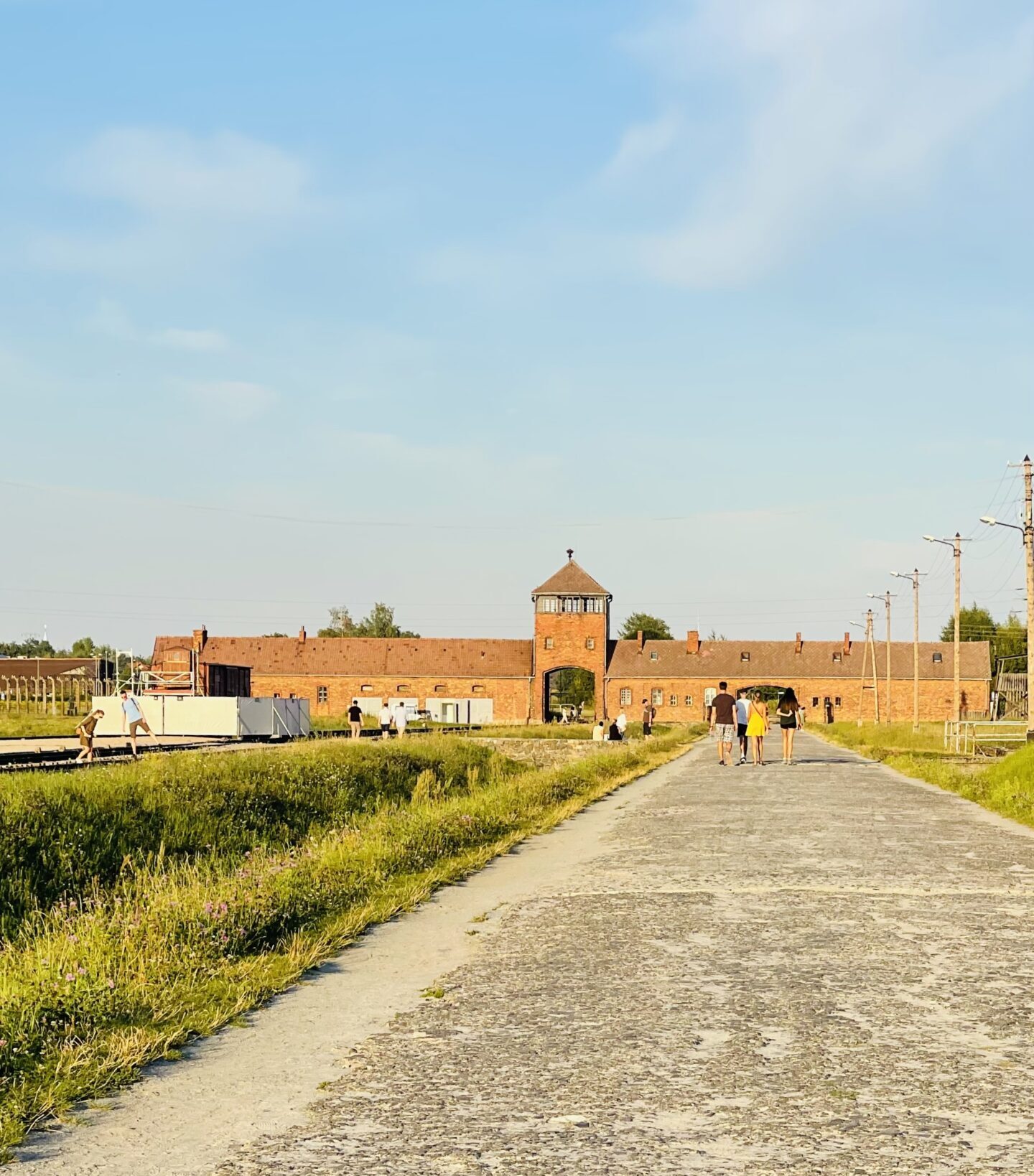
Sometimes, the most meaningful journeys are the ones we don’t plan. This summer, I found myself on such a journey, starting in Sarajevo, Bosnia, and winding my way up to Gdańsk, Poland. I didn’t set out with a specific itinerary in mind, but as I moved from place to place, it became clear that I was retracing the steps of history, from the origins of World War I to the aftermath of World War II. Sarajevo: The City Where It All Began Sarajevo is a city where history doesn’t just linger; it lives in the streets, in the buildings, in the very air you breathe. This is where World War I began, and as I walked through the city, I was struck by how visible the past still is. The bullet holes in the walls, the signs of a struggling economy—they all speak to the conflicts that have shaped this region. There’s a tension in Sarajevo, a sense that the wounds of the past are not fully healed. It’s a place that makes you confront history head-on, whether you’re ready for it or not. Poland: A Nation on Edge From Sarajevo, I made my way to Poland, a country that has its own heavy history. Gdańsk, in particular, was a stark reminder of how the past can cast long shadows over the present. There’s an unsettling fear here, a sensitivity to the possibility of conflict that feels all too real given the current situation with Russia and Ukraine. Poland’s history is marked by invasions and occupations, and that history feels very much alive today. The people here haven’t forgotten, and there’s a palpable anxiety about what might come next. Kraków: Confronting the Holocaust Kraków was the hardest part of the journey. Visiting the sites of the Holocaust, where millions of Jews were murdered, wasoverwhelming. The cruelty and inhumanity of it all are impossible to fully grasp. And yet, standing there, I couldn’t help but think about how these horrors are not as far behind us as we might like to believe. Genocide, ethnic cleansing—these things are still happening today, in places like Gaza and Xinjiang. It’s chilling to realize that the same forces that led to the Holocaust are still at work in the world. Gdańsk: A City of Contrasts Gdańsk was a pleasant surprise, a city that felt worlds away from the heavy history I had been immersed in. The summer tourists, the beautifully restored buildings, and the charming old town all create a leisurely vibe that almost makes you forget this was the very place where World War II began. The city is lively and full of energy, a testament to its recovery and resilience. I loved Gdańsk; it’s such a lovely town, with a warmth and character that draws you in. But then you walk into the World War II Museum, and the reality of what happened here comes rushing back. You’re reminded of the tragic history that unfolded not just in this city, but across the entire region. The pain, the suffering, the lives lost—it’s all still very real, and it’s impossible to ignore. As much as I enjoyed Gdańsk, the contrast between its current beauty and its dark past was a stark reminder of how fragile peace can be. Reflecting on History and the Present This journey was supposed to be a simple trip through Eastern Europe, but it turned into something much more profound. It was a stark reminder of the fragility of peace and the ease with which we can slip back into darkness. The lessons of history are not just about what happened back then; they’re about what could happen again if we’re not careful. The past is never really gone. It’s something we carry with us, and it’s up to us to decide how we’ll use it to shape the future. This trip has left me with a deep sense of responsibility—not just to remember the past, but to speak out against the injustices of the present. We can’t afford to forget what happened in Sarajevo, in Gdańsk, in Kraków. And we can’t afford to ignore what’s happening today, in places far from here but not so different in the suffering they endure. If there’s one thing this journey has taught me, it’s that history is not something we can leave behind. It’s something we must confront, again and again, to ensure that the tragedies of the past are never repeated. And as much as I love Gdańsk, I’m reminded that all of this—this beauty, this peace—could be gone overnight by the decision of a dictator. Peace is fragile, and we must fight to keep it.