An early check-in looks like a small favor. For a short-term rental with no front desk, it's a turnover, cleaning, and access problem. Here's what one favor cost me, and why it led to Karri.
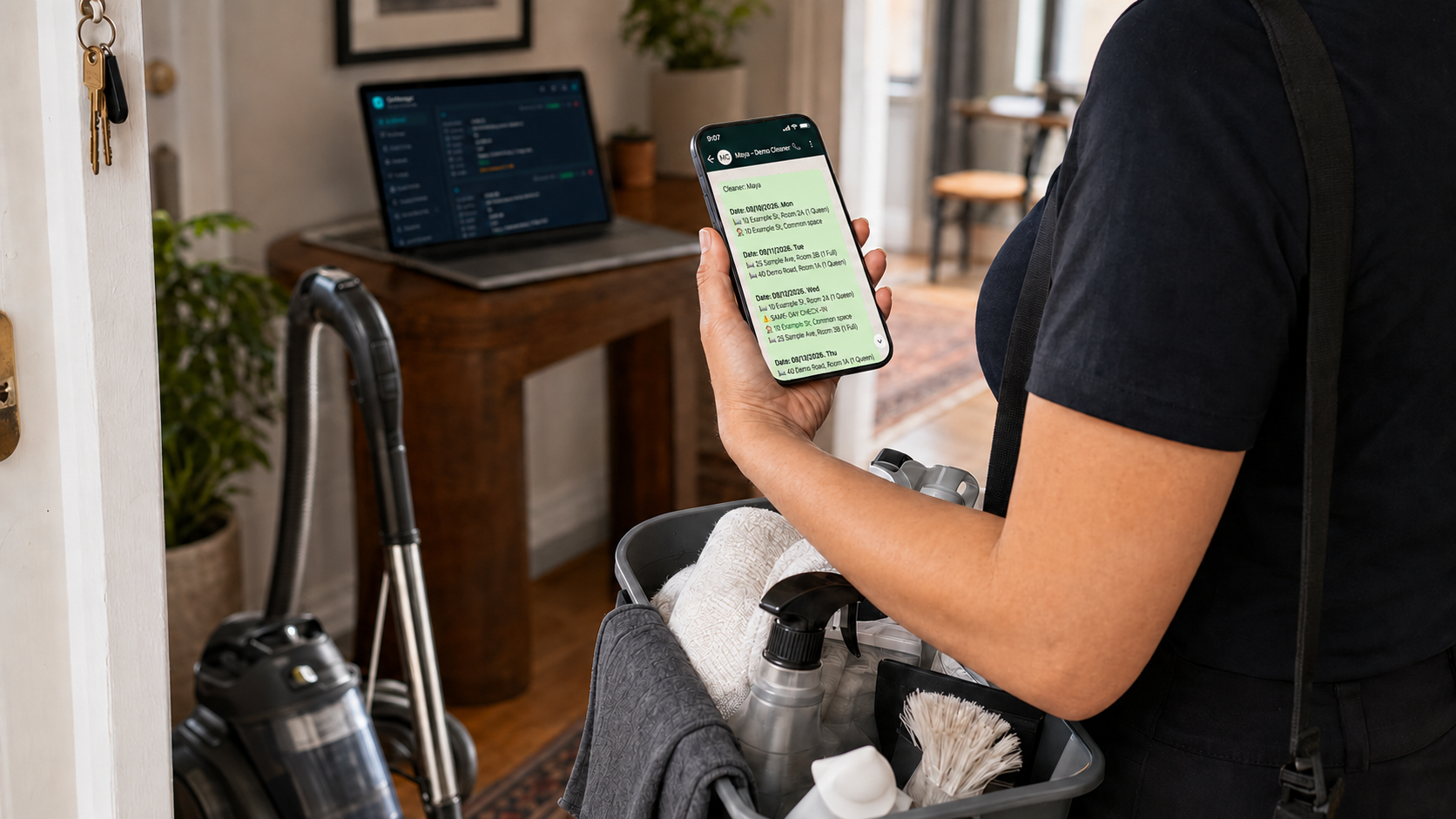
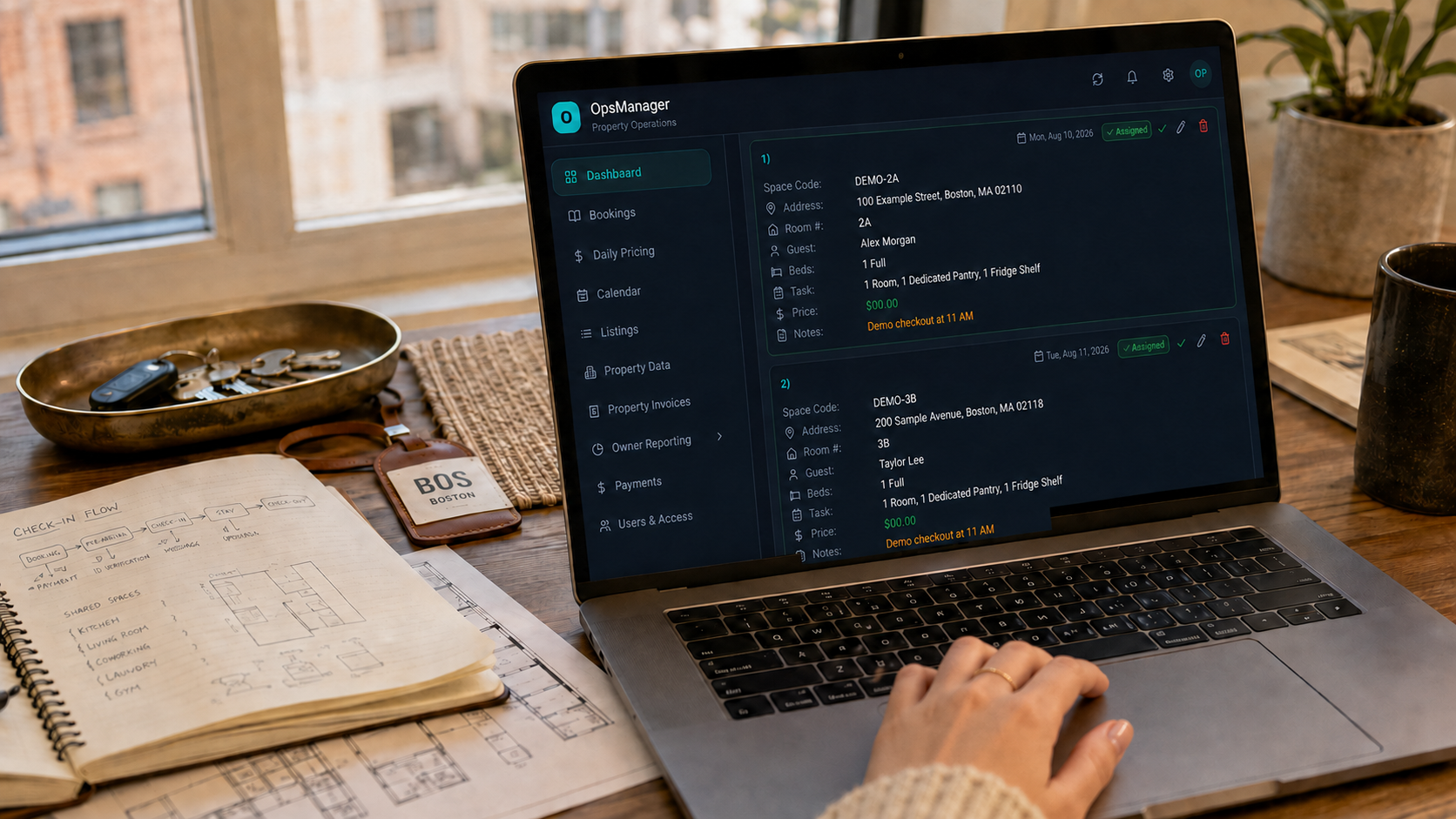
In the last article, I wrote about why I stopped shopping for a PMS and started building my own. The short version: every platform I tried was built by people who’ve never actually run a property. Vendor coordination is where that gap shows up the clearest, so it’s the first place I built for. If you run vacation rentals, mid-term rentals, or furnished housing, you already know: managing the cleaner calendar is one of the hardest parts of the job. I have my horror stories. The next guest is standing at the door, and the room inside is a mess — because my cleaner forgot they had a job that day. Or worse: I misread a booking, or a last-minute reservation came in, and I forgot to schedule a cleaner at all. It’s manageable at 5 rooms. At 50, it isn’t. 1. Why the fancy tools don’t actually help Traditional PMS platforms are proud of their calendar integrations — email notifications, third-party cleaner management tools, all of it. I don’t use any of it, because it misunderstands who’s on the other end. Cleaners aren’t sitting in an air-conditioned office checking emails from 9 to 5. They’re on the go, moving from one property to the next, all day. They don’t have time to open an app and read a notification. They use WhatsApp, or they call. That’s it. 2. What I tried before AI At 5 rooms, I didn’t need software at all. I wrote out each cleaner’s jobs every week and sent it over WhatsApp. When a job was done, I sent payment manually, one cleaner at a time. It was a lot of work, and the payment side especially was a mess — but at that scale, it was doable. Then I tried the obvious tools: Google Sheets, Google Calendar, a couple of rounds with Todoist, paid or free tools, I tried them all. None of it mattered — they were all about equally bad for what I needed. I was still tracking everything manually behind the scenes, and every one of these tools still required copying jobs over into a WhatsApp message by hand, which usually meant another round of editing once they were there. It was a mess dressed up as a system. That’s the pattern that stuck with me: low-value work, high stakes if you get it wrong, and you professional you could reasonably hire just to do this. So it fell on me — until I could hire AI to do it instead. 3. What I built instead So I built the version that actually matches how my cleaners work. The system now handles cleaner scheduling, bed type and job scope per room, pricing, and — the part that used to eat a full afternoon every other week — calculating bi-weekly payments per cleaner and emailing each of them an itemized breakdown, no manual math required. The optimization piece is where the real money is, and it’s also the part that’s too specific to my operation for any off-the-shelf PMS to have built. Some of my cleaners price by location, not by room — if they’re already on-site, an extra room in the same building costs less than a separate visit, because they’re saving their own travel time too. This is where property type matters, and it’s something I had to teach the AI explicitly. On a short-term or vacation rental, you generally don’t have room to optimize — guests book back to back, sometimes last-minute, and the clean has to happen right after checkout no matter what. But on furnished housing or mid-term rentals, turnover is much lower, and there’s often a day or two of slack between one guest leaving and the next arriving. That slack is exactly what the system looks for: a chance to shift a clean by a day and combine it with another unit at the same address. One recent example: a room with a checkout scheduled for a Saturday got pushed to Sunday so it could be combined with another unit in the same building checking out that day. Same cleaner, one trip instead of two, and a good discount for the combined job instead of two full-price visits. The daily piece is the one that matters most operationally day to day: every morning, it generates each cleaner’s task list and sends it straight to WhatsApp, so I’m not the one manually forwarding reminders anymore. 4. The pros: this is exactly the job AI should take over This is the category of work I now think AI is genuinely built for. It doesn’t require a brilliant mind — it requires an okay brain and complete reliability, applied to a job that’s high-stakes if you get it wrong but too low in value to justify hiring premium talent to do it. That combination used to mean it fell on me. Now it doesn’t, and that alone has made my life considerably easier. 5. The cons: I still can’t fully let go AI makes mistakes. Constantly. And the more I improve the system, the more new bugs I introduce along the way — every change is a chance to break something that was working. It saves me an enormous amount of time. But I still can’t treat it as fully autonomous — everything gets a review pass before it goes out. The mental model that’s worked best for me: this is my AI employee, and my job now is supervision, not execution. Where this leaves me Vendor coordination was never the interesting part of running COZi. It was just the part that broke the most, and the part no off-the-shelf tool was built to fix — because it was never built for how cleaners actually communicate. Replacing it didn’t require a smarter system. It required one narrow enough to fit the job. If you’re an operator reading this, I think this is your era. You hold something AI doesn’t have and nobody else can replicate — years of hands-on, day-to-day operating knowledge, the kind that only comes from actually doing the job. That’s the part that used to be hard to scale. Now it’s the part worth building around. Start building.
Somewhere along the way, streamlining COZi’s operations became one of my favorite parts of running it. Finding every friction point an operator hits — a cleaner who no-shows, a guest who checks in early, a payment that doesn’t reconcile — and quietly building a backup or a remedy for each one, until the whole thing runs without needing to lean on me constantly. That’s a genuinely satisfying kind of problem-solving, and I’m not going to pretend otherwise. But there’s a number every operator eventually hits where “I’ll just keep improving my own system” stops being the obvious answer, and “maybe I should get a real PMS” starts sounding reasonable. For me, that number arrived somewhere around 50 rooms. So I went and tried almost every PMS with a name you’d recognize. Here’s what I found. 1. The pricing doesn’t make sense at scale Most property management systems price per listing, typically $15–20 a month. That sounds fine until you do the math on 50 rooms: $750–1,000 a month, before you’ve automated a single thing you weren’t already doing. For $750 a month, I could hire someone in the Philippines to do everything the software does — and more, because a person can also use judgment. That comparison alone made most of these tools a hard sell before I’d even opened a demo. 2. Switching PMS is disruptive in a way the free trials don’t tell you The products themselves are, frankly, more similar than different — and the cheaper ones tend to be noticeably harder to use. But the real problem isn’t the interface. It’s what happens the moment you connect one to your OTA listings. Almost every PMS wants to take over your OTA settings the second you integrate — minimum stay rules, pricing, availability, all of it. There’s no “light” way to try one. You have to connect real, live listings to actually see how a system behaves, and if you don’t like it, disconnecting is its own project. That operational disruption is the real cost of a free trial, and it’s a big part of why I dragged my feet on this for so long even with trials sitting right there. 3. None of them are built for how I actually operate This is the one that ultimately mattered most. COZi isn’t a typical vacation rental portfolio — it’s co-living, which means bathrooms and kitchens are shared across multiple rooms. Cleaning, ideally, should be scheduled around actual occupancy, not a fixed calendar, so I’m not paying for a communal clean when half the rooms are empty. That’s an extremely specific need. It’s not a feature any general-purpose PMS is going to build, because it doesn’t apply to most of their customers — and it shouldn’t. But it’s exactly the kind of thing that’s easy to build when you’re building for one operation instead of thousands. That’s where vibe coding actually earns its place in this story. It’s not that AI makes building a PMS “easy” in some general sense — it’s that it makes building the specific, narrow thing your business actually needs viable, when no vendor was ever going to build it for you. Where this leaves me None of this is a claim that off-the-shelf PMS software is bad. For a lot of operators, the math and the fit are both fine. For COZi, at this size, with this kind of property, neither one worked — and that gap is what COZi Ops grew out of. This page will keep following that build as it happens — what’s shipped, what’s broken, and what I’d do differently with what I know now.
It was 3AM in December when my phone rang. A smoke alarm had gone off in one of my units. No smoke, no fire—but the guests were scared. Outside, Boston was buried in snow. Still, I threw on a jacket and went. Not to silence an alarm. To show up. To reassure. To calm an scared customer. To show that we are on top of everything. And also—to make sure everything really was okay. Because when you’re the one running the business, you’re not just calming guests. You’re also protecting the thing you’ve built. Sometimes, it’s about empathy.Sometimes, it’s about liability.Often, it’s both. When Going the Extra Mile Is the Job In my last post, I wrote about why we should obsess over feedback—not stars. That wasn’t about chasing approval. It was about listening carefully and responding intentionally. This is the next layer: turning that insight into action. Because as the operator, you’re constantly deciding when to go the extra mile—and when to hold the line. The goal isn’t to say yes to everything. It’s to serve in ways that truly matter—both for your guests and for the sustainability of your business. Smart service isn’t reactive. It’s intentional. Not Every Fire Needs to Be Put Out Being a business operator means navigating dozens of small decisions every day. Some issues need your full attention. Others will resolve on their own. The key isn’t how loud the complaint is—it’s what’s at stake. Do I deliver a portable AC unit when it’s 55°F outside?Do I apologize for the sound of footsteps in a hundred-year-old home? Some requests are about comfort. Some are about expectations. But some, like that 3AM smoke alarm, are about safety, trust—and protecting both the guest and your liability. The 3AM Rule (and When I Break It) I rarely show up in the middle of the night. But that night, I did. Not because it was convenient, but because it was the right call. I needed to make sure the space was safe. I needed to visibly demonstrate that we cared. And, just as importantly, I needed to be sure I wasn’t exposing the business to unnecessary risk. That one visit addressed guest anxiety, confirmed the alarm was a false one, ensured all systems were working, and gave me peace of mind. It likely prevented a refund—and earned several extra nights of booking. But I don’t jump at every message. When someone complains about the sound of cooking in a shared kitchen during dinner hours, I listen—but I don’t apologize. That’s part of the experience. And the price reflects it. You don’t get a BMW experience on a Toyota budget. Still reliable. Still great value. Just not the same. So I created a simple mental model to guide my choices: Urgency × Impact × Loyalty Potential = Worth It If the score is high across the board, I act.If not, I pause.That’s not neglect. That’s operating with intention. Thoughtful Service Is Good Business This isn’t a contradiction of what I wrote in Obsess Over Feedback, Not Stars. It’s a continuation. Feedback is signal. Action is strategy. You listen to everything. But you only act when the outcome justifies the effort—whether that means stronger guest loyalty, better reviews, reduced liability, or long-term trust. Every decision passes through two filters: Will this help my revenue—through conversion, retention, reviews, or pricing power? Will this hurt my bottom line—through cost, liability, or time that doesn’t return value? You don’t serve less.You serve smarter. And sometimes, smarter means showing up. Not just to fix the problem, but to take care of the people—and to protect the business. A guest recently left this note: “Thank you so much!! Everything was amazing. Thank you for going above and beyond. That was extremely appreciated.” That’s the result of thoughtful choices—of showing up when it matters, and holding back when it doesn’t. That’s how trust is built.That’s how businesses grow.That’s how you keep going—year after year, call after call. Even at 3AM.