
Karri Build #4 · November 27, 2026
I Built a Luggage Delivery App. Then a Customer Asked Which Car Was Mine.
A customer asked which car was mine. Another asked about tipping. Real deliveries showed me what the app was missing.
Read the article6 articles
Karri Build #4 · November 27, 2026
A customer asked which car was mine. Another asked about tipping. Real deliveries showed me what the app was missing.
Read the article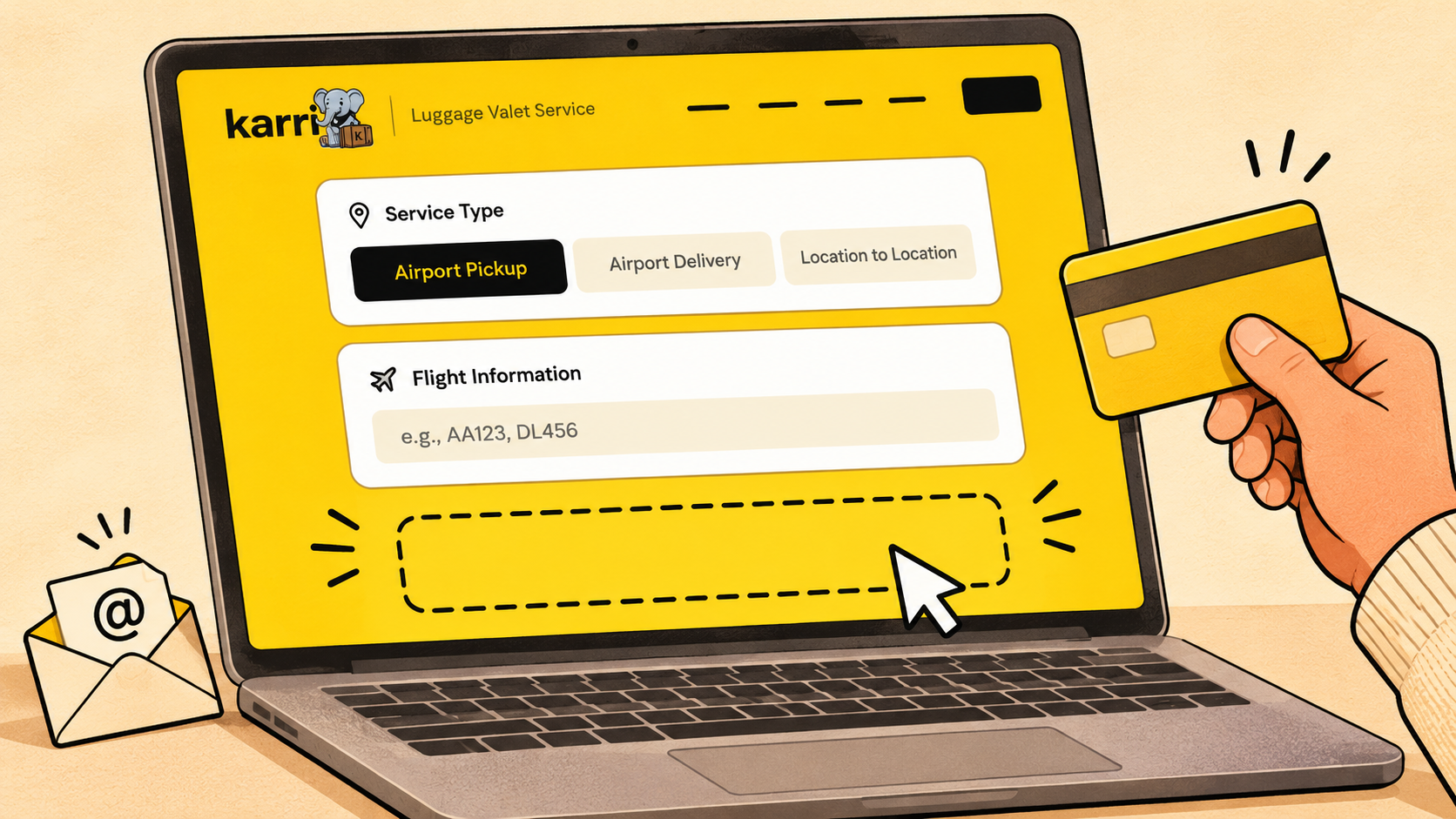
Karri Build #3 · November 25, 2026
I hadn’t built checkout yet. I also hadn’t counted on eight bags.
Read the article
Karri Build #2 · November 15, 2026
An early check-in looks like a small favor. For a short-term rental with no front desk, it's a turnover, cleaning, and access problem. Here's what one favor cost me, and why it led to Karri.
Read the article
Karri Build #1 · September 9, 2026
You’ve probably done this. You land at the airport at seven in the morning, on the good flight, the one that gets you into the city with a full day still ahead of you. Except your Airbnb isn’t ready until four in the afternoon. So now what? 1. The four ways travelers currently handle it Book an extra night, just to guarantee an early check-in. This works. It’s also the most expensive way to close a nine-hour gap — a full night’s rate, mostly unused, just to buy certainty. Find a luggage storage service nearby. A reasonable middle ground, except it rarely nets out cheap once you add it up: the storage fee, plus an Uber there, plus an Uber back later to retrieve everything — two trips, two fares, for bags that never needed to leave the airport. Drag your luggage around and sightsee anyway. Free. But you’re now touring a city with a suitcase, ruling out half the places you wanted to go, moving at the pace of your worst wheel. Find a café and wait it out. Also free. Also the option where your bags are handled and the morning is gone — the exact thing you landed early hoping to avoid. 2. What this actually costs you Every one of these is a different way of paying for the same nine hours — in money, in comfort, or in the time you actually flew in to spend. Pay for the extra night and you get certainty, at a real price. Use storage and you save on the room but spend it on fares and detours. Carry your bags or wait it out and you spend nothing, but you spend the morning. 3. The fifth option For travelers who don’t find any of the four above satisfying, there’s a fifth: hand your bags off at the airport and go start your day without them. That’s what Karri — the airport luggage pickup and delivery service — is for. Land, drop your bags, and go straight to the conference, the meeting, or the first walk through the city, while Karri delivers them to your address on a timeline that has nothing to do with when your room happens to be ready. No extra night booked on the chance you’ll want it. No round trip to a storage locker. No suitcase along for the sightseeing. Where this leaves me This is the first entry in the build log for Karri — starting with the problem as it actually shows up for the person flying in, before I get into how it looks from the side of the person running the hotel/Airbnb. Next: what it actually takes to say no to an early check-in request, and why saying yes is often the riskier choice for the host
Read the article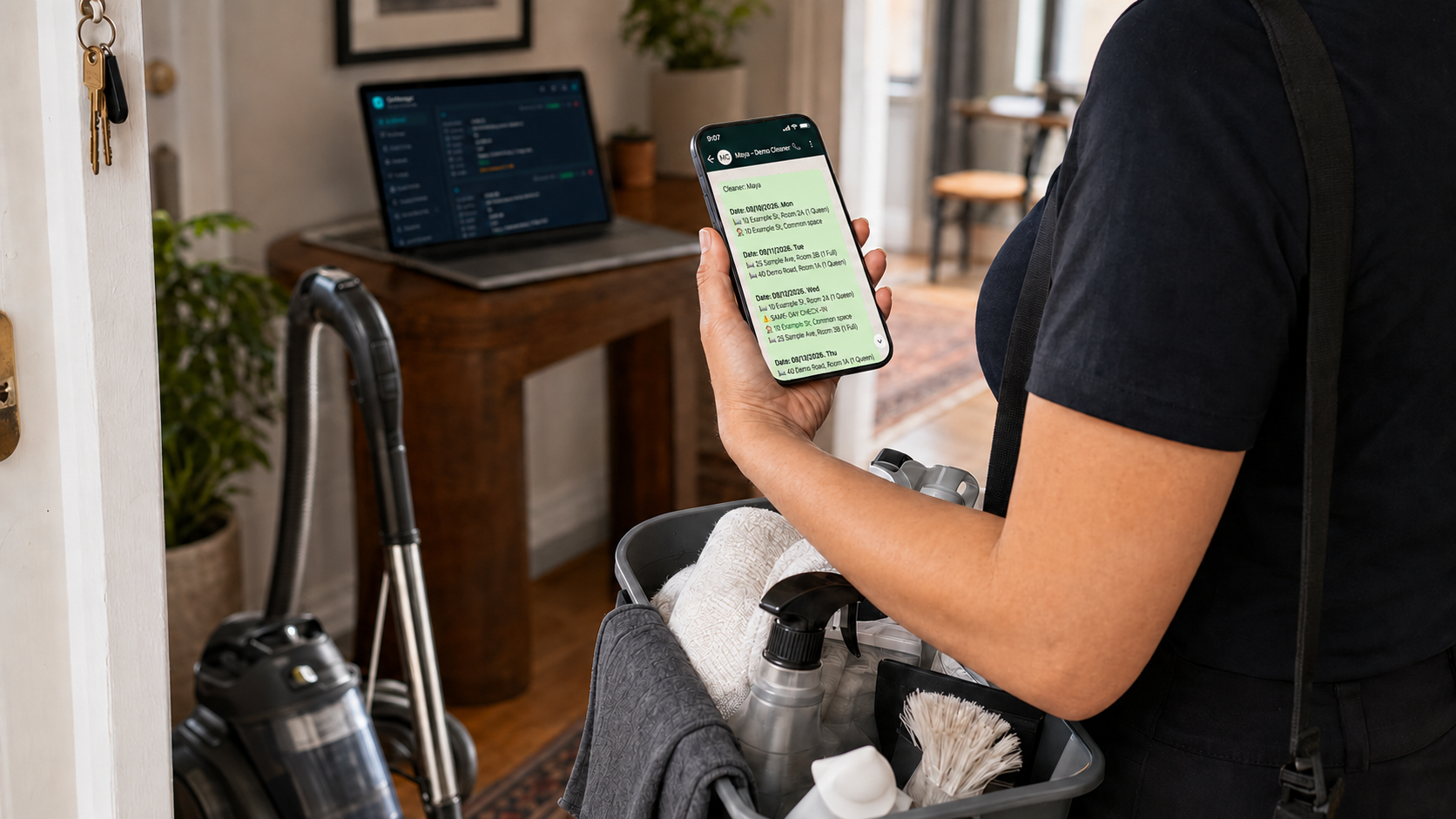
COZi Build #2 · August 6, 2026
In the last article, I wrote about why I stopped shopping for a PMS and started building my own. The short version: every platform I tried was built by people who’ve never actually run a property. Vendor coordination is where that gap shows up the clearest, so it’s the first place I built for. If you run vacation rentals, mid-term rentals, or furnished housing, you already know: managing the cleaner calendar is one of the hardest parts of the job. I have my horror stories. The next guest is standing at the door, and the room inside is a mess — because my cleaner forgot they had a job that day. Or worse: I misread a booking, or a last-minute reservation came in, and I forgot to schedule a cleaner at all. It’s manageable at 5 rooms. At 50, it isn’t. 1. Why the fancy tools don’t actually help Traditional PMS platforms are proud of their calendar integrations — email notifications, third-party cleaner management tools, all of it. I don’t use any of it, because it misunderstands who’s on the other end. Cleaners aren’t sitting in an air-conditioned office checking emails from 9 to 5. They’re on the go, moving from one property to the next, all day. They don’t have time to open an app and read a notification. They use WhatsApp, or they call. That’s it. 2. What I tried before AI At 5 rooms, I didn’t need software at all. I wrote out each cleaner’s jobs every week and sent it over WhatsApp. When a job was done, I sent payment manually, one cleaner at a time. It was a lot of work, and the payment side especially was a mess — but at that scale, it was doable. Then I tried the obvious tools: Google Sheets, Google Calendar, a couple of rounds with Todoist, paid or free tools, I tried them all. None of it mattered — they were all about equally bad for what I needed. I was still tracking everything manually behind the scenes, and every one of these tools still required copying jobs over into a WhatsApp message by hand, which usually meant another round of editing once they were there. It was a mess dressed up as a system. That’s the pattern that stuck with me: low-value work, high stakes if you get it wrong, and you professional you could reasonably hire just to do this. So it fell on me — until I could hire AI to do it instead. 3. What I built instead So I built the version that actually matches how my cleaners work. The system now handles cleaner scheduling, bed type and job scope per room, pricing, and — the part that used to eat a full afternoon every other week — calculating bi-weekly payments per cleaner and emailing each of them an itemized breakdown, no manual math required. The optimization piece is where the real money is, and it’s also the part that’s too specific to my operation for any off-the-shelf PMS to have built. Some of my cleaners price by location, not by room — if they’re already on-site, an extra room in the same building costs less than a separate visit, because they’re saving their own travel time too. This is where property type matters, and it’s something I had to teach the AI explicitly. On a short-term or vacation rental, you generally don’t have room to optimize — guests book back to back, sometimes last-minute, and the clean has to happen right after checkout no matter what. But on furnished housing or mid-term rentals, turnover is much lower, and there’s often a day or two of slack between one guest leaving and the next arriving. That slack is exactly what the system looks for: a chance to shift a clean by a day and combine it with another unit at the same address. One recent example: a room with a checkout scheduled for a Saturday got pushed to Sunday so it could be combined with another unit in the same building checking out that day. Same cleaner, one trip instead of two, and a good discount for the combined job instead of two full-price visits. The daily piece is the one that matters most operationally day to day: every morning, it generates each cleaner’s task list and sends it straight to WhatsApp, so I’m not the one manually forwarding reminders anymore. 4. The pros: this is exactly the job AI should take over This is the category of work I now think AI is genuinely built for. It doesn’t require a brilliant mind — it requires an okay brain and complete reliability, applied to a job that’s high-stakes if you get it wrong but too low in value to justify hiring premium talent to do it. That combination used to mean it fell on me. Now it doesn’t, and that alone has made my life considerably easier. 5. The cons: I still can’t fully let go AI makes mistakes. Constantly. And the more I improve the system, the more new bugs I introduce along the way — every change is a chance to break something that was working. It saves me an enormous amount of time. But I still can’t treat it as fully autonomous — everything gets a review pass before it goes out. The mental model that’s worked best for me: this is my AI employee, and my job now is supervision, not execution. Where this leaves me Vendor coordination was never the interesting part of running COZi. It was just the part that broke the most, and the part no off-the-shelf tool was built to fix — because it was never built for how cleaners actually communicate. Replacing it didn’t require a smarter system. It required one narrow enough to fit the job. If you’re an operator reading this, I think this is your era. You hold something AI doesn’t have and nobody else can replicate — years of hands-on, day-to-day operating knowledge, the kind that only comes from actually doing the job. That’s the part that used to be hard to scale. Now it’s the part worth building around. Start building.
Read the article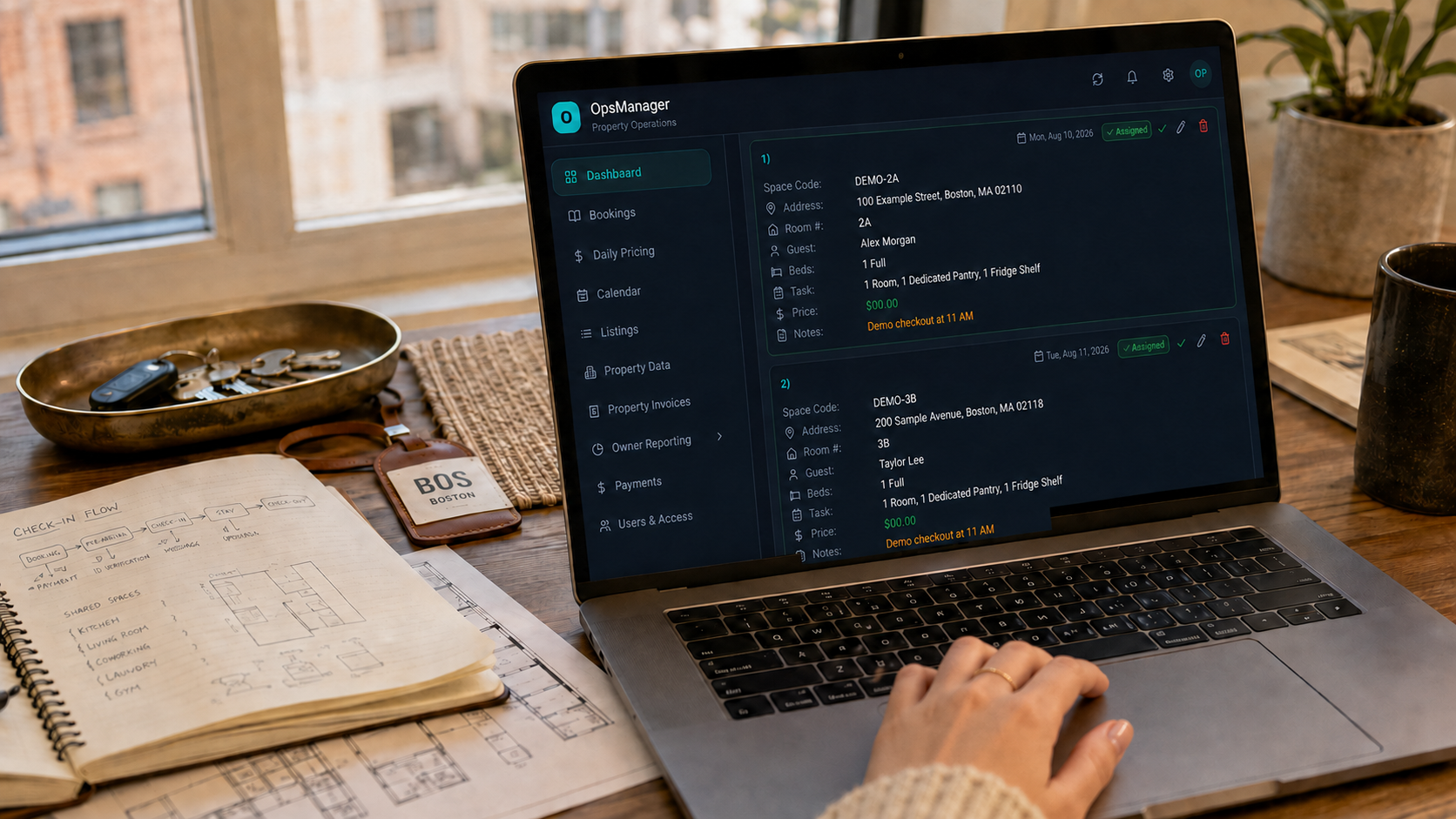
COZi Build #1 · July 23, 2026
Somewhere along the way, streamlining COZi’s operations became one of my favorite parts of running it. Finding every friction point an operator hits — a cleaner who no-shows, a guest who checks in early, a payment that doesn’t reconcile — and quietly building a backup or a remedy for each one, until the whole thing runs without needing to lean on me constantly. That’s a genuinely satisfying kind of problem-solving, and I’m not going to pretend otherwise. But there’s a number every operator eventually hits where “I’ll just keep improving my own system” stops being the obvious answer, and “maybe I should get a real PMS” starts sounding reasonable. For me, that number arrived somewhere around 50 rooms. So I went and tried almost every PMS with a name you’d recognize. Here’s what I found. 1. The pricing doesn’t make sense at scale Most property management systems price per listing, typically $15–20 a month. That sounds fine until you do the math on 50 rooms: $750–1,000 a month, before you’ve automated a single thing you weren’t already doing. For $750 a month, I could hire someone in the Philippines to do everything the software does — and more, because a person can also use judgment. That comparison alone made most of these tools a hard sell before I’d even opened a demo. 2. Switching PMS is disruptive in a way the free trials don’t tell you The products themselves are, frankly, more similar than different — and the cheaper ones tend to be noticeably harder to use. But the real problem isn’t the interface. It’s what happens the moment you connect one to your OTA listings. Almost every PMS wants to take over your OTA settings the second you integrate — minimum stay rules, pricing, availability, all of it. There’s no “light” way to try one. You have to connect real, live listings to actually see how a system behaves, and if you don’t like it, disconnecting is its own project. That operational disruption is the real cost of a free trial, and it’s a big part of why I dragged my feet on this for so long even with trials sitting right there. 3. None of them are built for how I actually operate This is the one that ultimately mattered most. COZi isn’t a typical vacation rental portfolio — it’s co-living, which means bathrooms and kitchens are shared across multiple rooms. Cleaning, ideally, should be scheduled around actual occupancy, not a fixed calendar, so I’m not paying for a communal clean when half the rooms are empty. That’s an extremely specific need. It’s not a feature any general-purpose PMS is going to build, because it doesn’t apply to most of their customers — and it shouldn’t. But it’s exactly the kind of thing that’s easy to build when you’re building for one operation instead of thousands. That’s where vibe coding actually earns its place in this story. It’s not that AI makes building a PMS “easy” in some general sense — it’s that it makes building the specific, narrow thing your business actually needs viable, when no vendor was ever going to build it for you. Where this leaves me None of this is a claim that off-the-shelf PMS software is bad. For a lot of operators, the math and the fit are both fine. For COZi, at this size, with this kind of property, neither one worked — and that gap is what COZi Ops grew out of. This page will keep following that build as it happens — what’s shipped, what’s broken, and what I’d do differently with what I know now.
Read the article