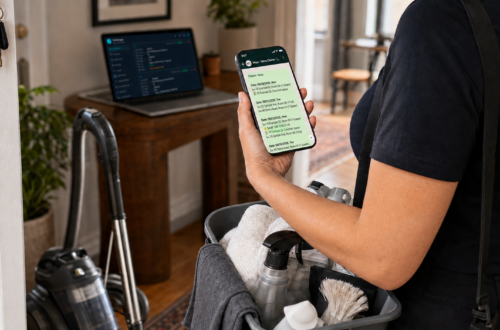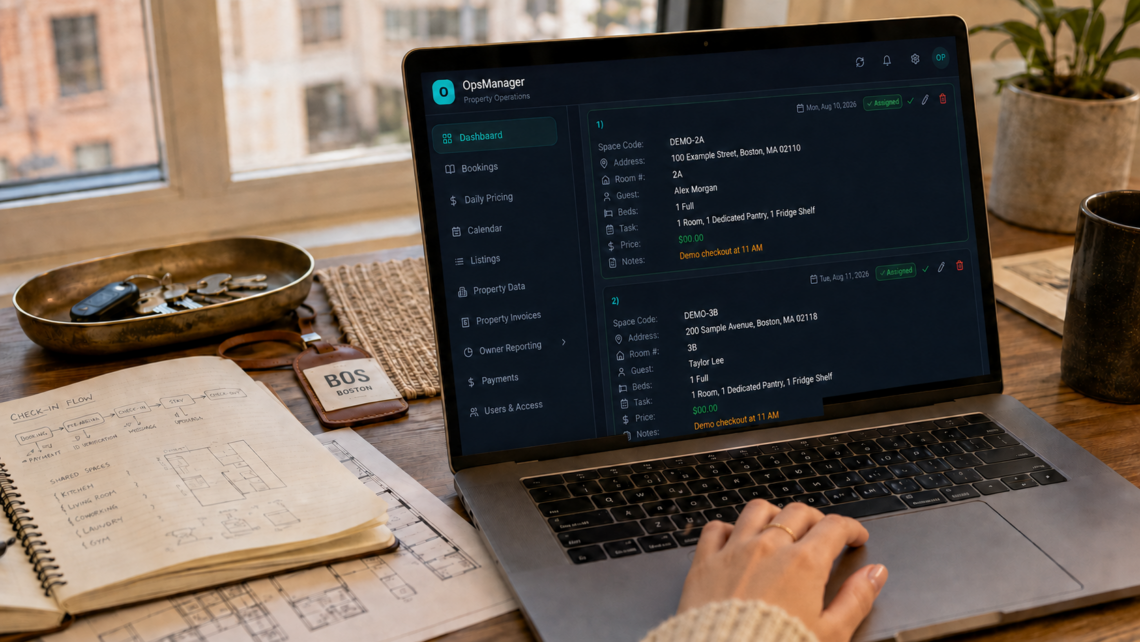
Somewhere along the way, streamlining COZi’s operations became one of my favorite parts of running it. Finding every friction point an operator hits — a cleaner who no-shows, a guest who checks in early, a payment that doesn’t reconcile — and quietly building a backup or a remedy for each one, until the whole thing runs without needing to lean on me constantly. That’s a genuinely satisfying kind of problem-solving, and I’m not going to pretend otherwise.
But there’s a number every operator eventually hits where “I’ll just keep improving my own system” stops being the obvious answer, and “maybe I should get a real PMS” starts sounding reasonable. For me, that number arrived somewhere around 50 rooms.
So I went and tried almost every PMS with a name you’d recognize. Here’s what I found.
1. The pricing doesn’t make sense at scale
Most property management systems price per listing, typically $15–20 a month. That sounds fine until you do the math on 50 rooms: $750–1,000 a month, before you’ve automated a single thing you weren’t already doing.
For $750 a month, I could hire someone in the Philippines to do everything the software does — and more, because a person can also use judgment. That comparison alone made most of these tools a hard sell before I’d even opened a demo.
2. Switching PMS is disruptive in a way the free trials don’t tell you
The products themselves are, frankly, more similar than different — and the cheaper ones tend to be noticeably harder to use. But the real problem isn’t the interface. It’s what happens the moment you connect one to your OTA listings.
Almost every PMS wants to take over your OTA settings the second you integrate — minimum stay rules, pricing, availability, all of it. There’s no “light” way to try one. You have to connect real, live listings to actually see how a system behaves, and if you don’t like it, disconnecting is its own project. That operational disruption is the real cost of a free trial, and it’s a big part of why I dragged my feet on this for so long even with trials sitting right there.
3. None of them are built for how I actually operate
This is the one that ultimately mattered most. COZi isn’t a typical vacation rental portfolio — it’s co-living, which means bathrooms and kitchens are shared across multiple rooms. Cleaning, ideally, should be scheduled around actual occupancy, not a fixed calendar, so I’m not paying for a communal clean when half the rooms are empty.
That’s an extremely specific need. It’s not a feature any general-purpose PMS is going to build, because it doesn’t apply to most of their customers — and it shouldn’t. But it’s exactly the kind of thing that’s easy to build when you’re building for one operation instead of thousands.
That’s where vibe coding actually earns its place in this story. It’s not that AI makes building a PMS “easy” in some general sense — it’s that it makes building the specific, narrow thing your business actually needs viable, when no vendor was ever going to build it for you.
Where this leaves me
None of this is a claim that off-the-shelf PMS software is bad. For a lot of operators, the math and the fit are both fine. For COZi, at this size, with this kind of property, neither one worked — and that gap is what COZi Ops grew out of.
This page will keep following that build as it happens — what’s shipped, what’s broken, and what I’d do differently with what I know now.